Silent, no glowing element, a cooler-to-the-touch surface, and a 24-hour timer that can pre-warm the room before the alarm. It's the heater you forget is running.
~$190 typical price
Buy on AmazonUse-case guide · 2026
A bedroom heater has one job most heaters are bad at: running all night without keeping you awake or worrying you. That rules out loud fans and glowing elements and pushes you toward silent oil-filled radiators, a quiet ceramic with a timer for pre-bed warm-up — or the smartest option, heating the bed instead of the room.
Heater size needed
750–1,500W (a 10×12 to 14×16 bedroom)
Type that fits best
Oil-filled radiator or heated mattress pad
Not sure what size you need? Run your room through the heater sizing tool →

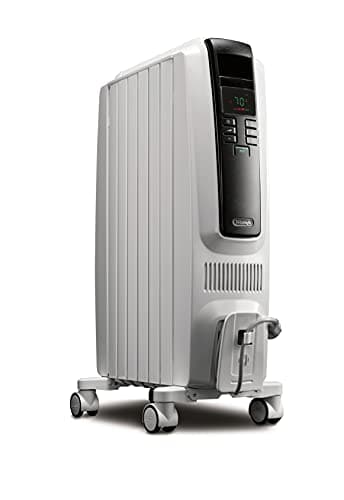
Silent, no glowing element, a cooler-to-the-touch surface, and a 24-hour timer that can pre-warm the room before the alarm. It's the heater you forget is running.
~$190 typical price
Buy on Amazon
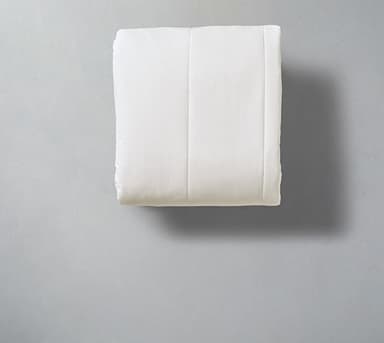
Heat the bed, not the room: 12 settings, auto-off, dual controls, and a tiny power draw. Turn the thermostat down and still climb into a warm bed.
~$60 typical price
Buy on Amazon
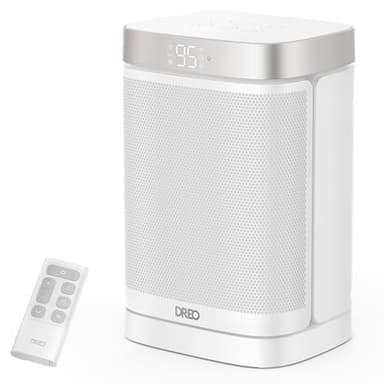
Quiet for a ceramic, with a precise digital thermostat, ECO cycling, and a 12-hour timer — warm the room before bed, let it cycle on low, and it shuts itself off.
~$45 typical price
Buy on Amazon
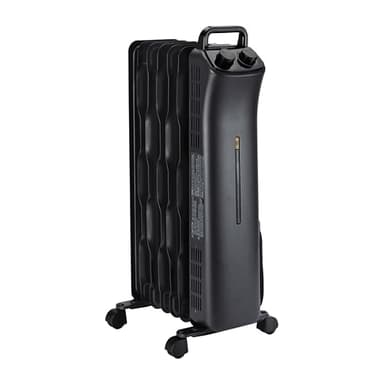
The same silent oil-filled comfort as the De'Longhi for about a third of the price, with tip-over shutoff — just no timer.
~$70 typical price
Buy on AmazonWith a modern heater that has tip-over and overheat protection, plugged directly into a wall outlet, three feet from anything flammable — yes, it's a widely accepted practice, and an oil-filled radiator is the safest design for it. The safer-still option is a heated mattress pad with auto-off and a lower thermostat.
Most bedrooms (120–220 sq ft) are covered by a 1,500W heater used as supplemental heat, and a 750W low setting is often enough to hold temperature overnight in an insulated room. Use our sizing tool if the room is large or drafty.