6,000W on high gives an insulated two-car garage real headroom, the 3,000W low holds temperature cheaply, and it mounts to the ceiling or wall on a standard 30A circuit.
~$176 typical price
Buy on AmazonUse-case guide · 2026
A garage is where 120V plug-in heaters fail: 1,500W is nowhere near enough for 400 square feet of concrete and an uninsulated door. Real garage heat is 240V electric (5,000–6,000W), natural gas or propane for big spaces, or a portable propane unit for short sessions — chosen by square footage, insulation, and what power you have out there.
Heater size needed
10 W/sq ft insulated · 15+ W/sq ft uninsulated (≈ 5,000W for a 2-car)
Type that fits best
240V fan-forced unit heater (or gas for 3-car / uninsulated)
Not sure what size you need? Run your room through the heater sizing tool →

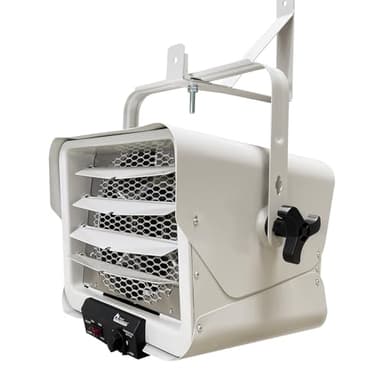
6,000W on high gives an insulated two-car garage real headroom, the 3,000W low holds temperature cheaply, and it mounts to the ceiling or wall on a standard 30A circuit.
~$176 typical price
Buy on Amazon
5,000W of hardwired ceiling-mount heat for about a hundred dollars — the cheapest permanent garage heater that actually works.
~$108 typical price
Buy on Amazon
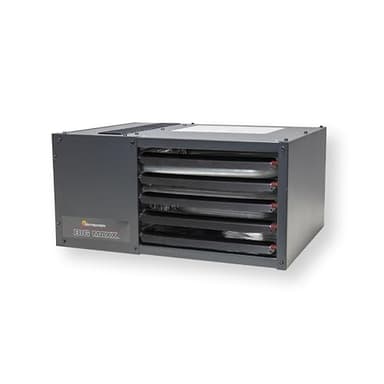
50,000 BTU from natural gas or propane, vented, on a wall thermostat — three times an electric unit's output at roughly a third the running cost.
~$453 typical price
Buy on Amazon
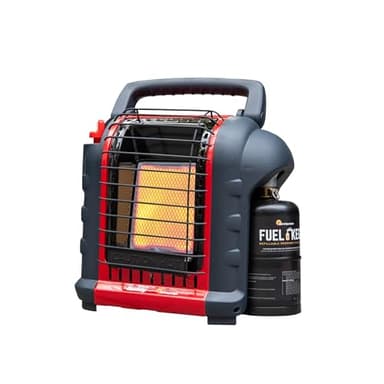
Propane, no electricity, 9,000 BTU in seconds. For a couple of hours on a Saturday with the door cracked and a CO alarm running, it's the cheapest garage heat there is.
~$100 typical price
Buy on AmazonRoughly 10 watts per square foot if insulated — about 4,500–5,000W (15,000–17,000 BTU) for a 450 sq ft garage. Uninsulated, plan on 15–20 W/sq ft, which is 7,000W+ and usually points to a gas unit heater.
It'll warm a workbench area if you stand in front of it, but 1,500W (5,100 BTU) can't raise the temperature of a garage meaningfully. For real garage heat you need a 240V electric unit or a gas heater.