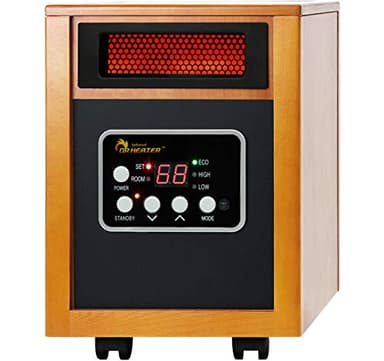
1. Dr Infrared Heater DR-968
Radiant warmth you feel regardless of how fast the warm air is leaking out the windows — the single best heater for an old house living room.
~$113 typical price
Buy on AmazonUse-case guide · 2026
In a leaky house, heating the air is a losing game — it escapes as fast as you warm it. The winning strategy is to heat people and zones instead: infrared that warms you directly, a heated mattress pad at night, one good heater in the room you're in, and the furnace set lower everywhere else. And an afternoon with weatherstripping and plastic window film beats any heater upgrade.
Heater size needed
1,500W per occupied room (zone heating), not whole-house
Type that fits best
Infrared cabinet + heated bedding
Not sure what size you need? Run your room through the heater sizing tool →

Radiant warmth you feel regardless of how fast the warm air is leaking out the windows — the single best heater for an old house living room.
~$113 typical price
Buy on Amazon
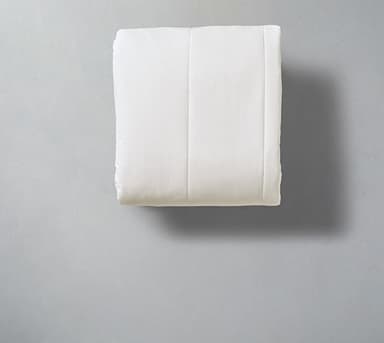
Sleep warm while the bedroom sits at 58–60°F. In a house that can't hold heat, this is the biggest comfort-per-dollar win there is.
~$60 typical price
Buy on Amazon
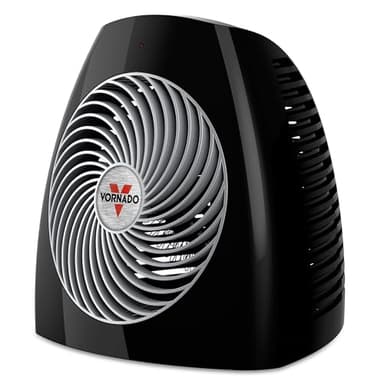
Circulation breaks up the cold pockets near old windows and the hot layer at the ceiling, so the heat you're paying for is actually where you sit.
~$75 typical price
Buy on Amazon
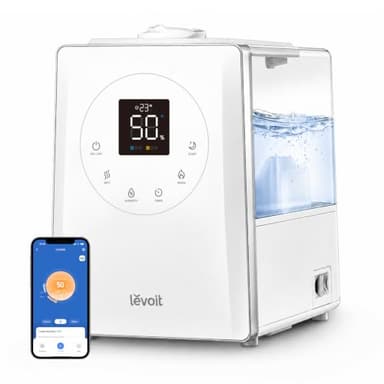
Old houses leak dry winter air in; 40% humidity makes the same thermostat setting feel several degrees warmer and stops the static and cracked lips.
~$109 typical price
Buy on AmazonRadiant (infrared) heat aimed at where you sit, plus reducing the drafts. Infrared warms you directly rather than warming air that leaks away, so it feels effective even while the room itself stays cool. Seal what you can first — the heater then has a fighting chance.
It can be, if you use them to zone-heat one or two occupied rooms while lowering the whole-house thermostat several degrees. Running multiple space heaters to heat the whole house is almost always more expensive than the furnace.